Hidden Potential in Old Baseball Cards: What Collectors Notice First
You found a binder, shoebox, or full set and you suspect some cards might be valuable. The problem is most cards are common, and online prices are noisy. This article is for collectors and families who want a realistic read on what to pull, what to ignore, and what to do next.
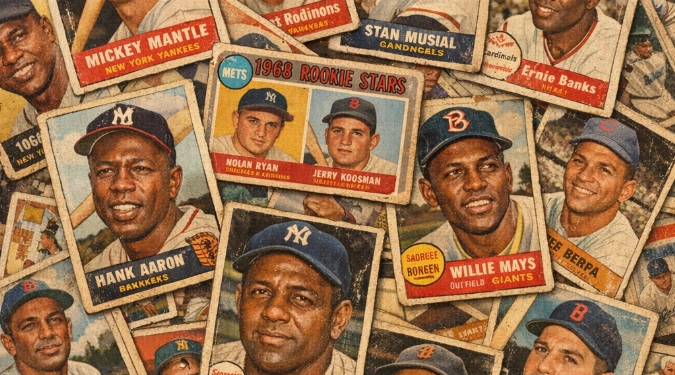
Spot the few traits that separate a $2 card from a $2,000 one. Learn the quick checks collectors use: set, year, brand, and condition tells. Get a clean process to verify value, avoid rookie mistakes, and choose the right place to sell. You will also know which modern and junk-wax cards still hit.
What Collectors Check In The First 30 Seconds
Collectors start with four filters: year, player, issue, and condition. They do not “look it up later” before deciding if it is worth deeper work. Start the same way.
- Year and era: Pre-war, post-war, and the 1986–1994 overprint era behave very differently in price.
- Issue details: Base card, insert, parallel, short print, or error changes everything.
- Brand and set: A common Donruss base card is not judged like a Topps Traded or a Bowman Chrome rookie.
- Condition tells: Centering, corners, edges, and surface decide whether grading is even possible.
The Two Questions That Unlock Value Fast
Is It A Key Card?
“Key” usually means rookie, iconic star, scarce insert, or scarce pre-war. A mid-career base card can still sell, but it rarely drives a big number.
If you are staring at old baseball cards from a family box, pull Hall of Famers first. Then pull rookies and early-career cards. Then pull anything that looks different, like foil, die-cuts, or serial stamps.
Is It Gradeable?
A raw card can sell, but high prices often require a trusted grade. Collectors mentally grade in seconds. Soft corners, wax stains, print snow, and off-centering kill upside.
Before you do anything else, sleeve and top-load your best candidates. Use penny sleeves and 35pt top loaders. Avoid binder rings for your top cards.
How Do I Find Out How Much A Baseball Card Is Worth
Use sold prices, not asking prices. The clean method is three steps.
- Identify the exact card: match year, set name, card number, and any variant notes.
- Check recent sold comps: search the exact wording and filter to completed sales.
- Adjust for condition: compare to cards with similar corner wear and centering.
For a quick check baseball card value workflow, use a bright desk lamp. Tilt the card to spot surface scratches and gloss loss. Then measure centering by eye. If it looks “off,” it usually is.
Brand Signals Collectors Trust
Brand alone does not guarantee value, but it guides expectations. Collectors tend to treat these as stronger signals of demand and liquidity: Topps, Bowman, Upper Deck, Fleer, Donruss, and Score.
Within Topps, certain lines get special attention. Look for Topps Traded, Topps Tiffany, and specific years of Chrome issues. For valuable topps baseball cards, set builders also care about high-number series and tough short prints.
Where Hidden Money Shows Up In The 1990s
The “junk wax” era has mountains of low-value cards. Still, 1990s baseball cards worth money usually share scarcity or star power. Think limited inserts, refractors, and premium issues.
Collectors hunting the most valuable baseball cards 1990s often focus on: early Derek Jeter issues, Ken Griffey Jr. premium inserts, Frank Thomas premium rookies, and rare serial-numbered parallels. Those are not guaranteed hits, but they are worth pulling first.
Even if you mostly have base sets, look for factory set variations, odd finishes, or miscuts that are clearly unusual. Most “errors” are not valuable. Documented, recognized ones are different.
Modern Cards That Can Still Surprise You
Modern baseball cards worth money usually come from three buckets: true rookie cards, numbered parallels, and case-hit inserts. Autographs and relics matter, but only with the right player and set.
If you have sealed products, do not rip boxes assuming profit. Sealed wax can be its own market. Condition and trust matter more than luck.
A Practical Pull List For A First Sort
Use this triage so you do not waste hours on commons.
- Bucket A: stars, rookies, pre-1980, anything numbered, any refractor-like shine, and clean vintage.
- Bucket B: 1980s–1990s base cards, minor stars, and worn vintage.
- Bucket C: duplicates and damaged cards.
This is where many people realize they have baseball cards worth money mixed into bulk.
Best Way To Sell Baseball Cards Without Regret
Match the selling lane to the card’s ceiling and hassle level. For high-end cards, use a major auction house or a well-known consignment seller. For mid-tier cards, list directly on a large marketplace. For bulk, sell as lots.
If you plan to sell baseball cards, photograph well. Use indirect light, show corners, and show the back. Keep copies of shipping labels and insure expensive packages.
For people trying to sell old baseball cards from estates, ask dealers for a written breakdown. It should show estimated values by group, not one lump number.
FAQ
Should I Clean Or Press A Card?
Do not alter cards. Cleaning can leave marks and can be considered tampering. Light dusting with a soft blower is safer than wiping.
What Should I Do With Low-Value Bulk?
Sort by team or set and sell as lots. Donate duplicates to youth programs. Keep one “memory” stack and move the rest.
Is Professional Grading Always Worth It?
No. Grading makes the most sense when the card is already clean and the graded price jump is meaningful. It makes less sense for worn cards and low-demand players.
How Do I Ship High-Value Cards Safely?
Use a penny sleeve, then a semi-rigid holder or top loader with painter’s tape on top. Sandwich it between cardboard, then ship in a rigid box. Add tracking and insurance when the loss would hurt.
References
- Professional Sports Authenticator (PSA): Grading standards and population reports
- SGC: Grading scale and card handling guidelines
- Beckett: Price guide concepts and set checklists
Disclaimer: The information provided in this article is for educational and informational purposes only. It does not constitute professional advice. Readers should conduct their own research and consult with qualified professionals before making any decisions.