Understanding If Low Vitamins Could Relate to Skin Itching
Persistent itching can make you suspect a new soap, allergy, or even a medical issue. Many people also wonder if a vitamin or mineral gap could be the missing piece. If you feel stuck between random supplements and endless creams, this article helps you sort signals from noise.
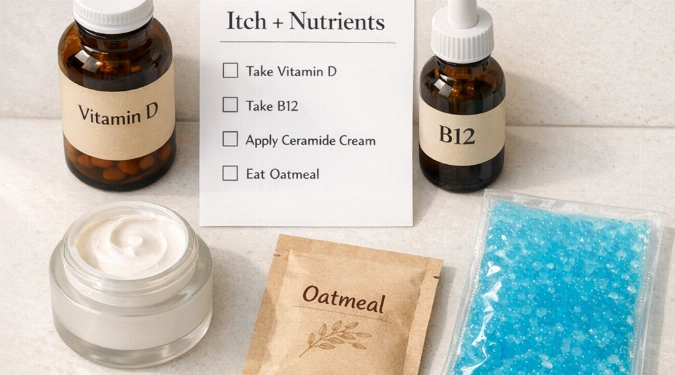
Learn which nutrient gaps most often show up as itch. Use a simple symptom-and-risk checklist to decide what to test. Get a fast, practical plan for calming flare-ups while you fix the root cause safely.
When Itch Points To Nutrients
Itch is a nerve signal. Skin sends it when the barrier is weak, inflamed, or too dry. Some nutrient gaps can make those problems more likely. Others are red herrings. The goal is to connect patterns, not guess.
Vitamin Gaps Most Linked To Itching
Vitamin D
Low vitamin D can track with eczema and higher inflammation. It is also common in people who get little sun. Symptoms can include dry, tight skin and frequent flares.
Vitamin B12
Low B12 can affect nerves and skin turnover. Some people describe burning or prickly itch. Risk rises with metformin use, long-term acid reducers, and vegan diets without fortified foods.
Niacin And Riboflavin
Low niacin or riboflavin can show up with irritated, scaly rashes. The itch is often paired with redness around sun-exposed areas or mouth corners. Alcohol use disorder and very limited diets raise risk.
Vitamin A
Vitamin A supports normal keratinization. Low levels can contribute to rough, dry skin. True deficiency is uncommon, but it can occur with fat malabsorption.
Mineral And Fat Deficiencies People Miss
Some cases fit better under itchy skin deficiency patterns that are not vitamins.
- Iron: Low iron can correlate with generalized itch, even without a rash. It may also worsen restless sleep.
- Zinc: Low zinc can impair wound healing and barrier repair. Look for cracks, scale, or frequent infections.
- Essential fatty acids: Very low omega-3 and omega-6 intake can worsen dryness. The skin may look dull and flaky.
Quick Triage Checklist Before You Supplement
Use these questions to guide what deficiency causes skin itching in your case. Bring the answers to a clinician.
- Is itch worse after hot showers, with winter air, or after frequent handwashing?
- Do you have a new diet pattern, bariatric surgery history, or chronic diarrhea?
- Do you take metformin, acid reducers, or cholesterol binders?
- Do you also have hair shedding, mouth sores, numbness, or unusual fatigue?
- Is there a visible rash, hives, burrows, or oozing areas?
What To Ask A Clinician To Check
If your history fits, ask about targeted labs instead of a random supplement stack. Common options include 25-OH vitamin D, B12 with methylmalonic acid, ferritin with iron studies, zinc, and a CBC. If malabsorption is possible, ask about vitamin A and other fat-soluble levels.
What Stops Itching Fast While You Investigate
If you need what stops itching fast, focus on barrier support and cooling. Skip fragrance.
- Apply a thick moisturizer within three minutes of bathing.
- Use petrolatum or Aquaphor on hot spots at night.
- Try a ceramide cream like CeraVe Moisturizing Cream.
- Use colloidal oatmeal options like Aveeno Soothing Bath Treatment.
- Use a cool compress for five to ten minutes.
For what stops itching, many people also do well with a short course of 1% hydrocortisone on small areas. Ask a pharmacist if you have questions. Avoid applying it to the face or groin without guidance.
Choosing Over-The-Counter Options Without Guessing
People often search for best medicine for itchy skin. Match the product to the skin problem.
- Dry, flaky skin: urea 10% lotion, or lactic acid lotions like AmLactin.
- Thick itch plaques: pramoxine anti-itch lotions, like Sarna Sensitive.
- Inflamed patches: low-strength steroid cream for a brief window.
If you wonder what is the best medicine for itchy skin, the answer depends on whether inflammation, dryness, or nerve itch leads.
When A Dermatology Visit Matters
See a dermatologist itchy skin visit when itch lasts over six weeks, wakes you at night, or comes with weight loss, fevers, or jaundice. Go sooner for widespread hives, facial swelling, or trouble breathing. Bring photos of flare patterns and every product you use.
Common Non-Vitamin Causes Worth Ruling Out
Many searches for what causes itchy skin end up here. Consider contact dermatitis from fragrance, nickel, or preservatives like methylisothiazolinone. Also consider scabies, eczema, psoriasis, kidney or liver disease, thyroid issues, and some medications. Ask what causes dry itchy skin if your home humidity is low or you overuse harsh cleansers.
How To Supplement More Safely
If you suspect vitamin deficiency itching, test first when possible. Choose a single-ingredient product, not a mega blend. Watch upper limits, especially for vitamin A and zinc. Recheck levels after changes, and track itch on a weekly scale.
References
- American Academy of Dermatology Association
- National Institutes of Health Office of Dietary Supplements
- Mayo Clinic
Disclaimer: The information provided in this article is for educational and informational purposes only. It does not constitute professional advice. Readers should conduct their own research and consult with qualified professionals before making any decisions.